Top 10 Benefits of Solar Traffic Signal Lights in China
Solar Traffic Signal Lights are becoming increasingly popular in China. These innovative systems provide numerous advantages for urban traffic management. One significant benefit is their ability to enhance road safety. By utilizing solar power, these lights operate effectively even in remote areas. They reduce dependence on electricity, lowering operational costs.
Moreover, Solar Traffic Signal Lights are environmentally friendly. They contribute to reducing carbon footprints. Consequently, cities that embrace this technology demonstrate their commitment to sustainability. The installation process is relatively straightforward. This encourages more municipalities to adopt them. However, some challenges still exist, such as the initial investment costs and maintenance concerns.
As cities expand, traffic management becomes more complex. Solar Traffic Signal Lights offer a reliable solution to these issues. They not only improve safety but also ensure better traffic flow. Nonetheless, it is essential to address potential weaknesses in design and functionality. Continuous evaluation and feedback are crucial for making these systems even more effective.

Overview of Solar Traffic Signal Lights in China
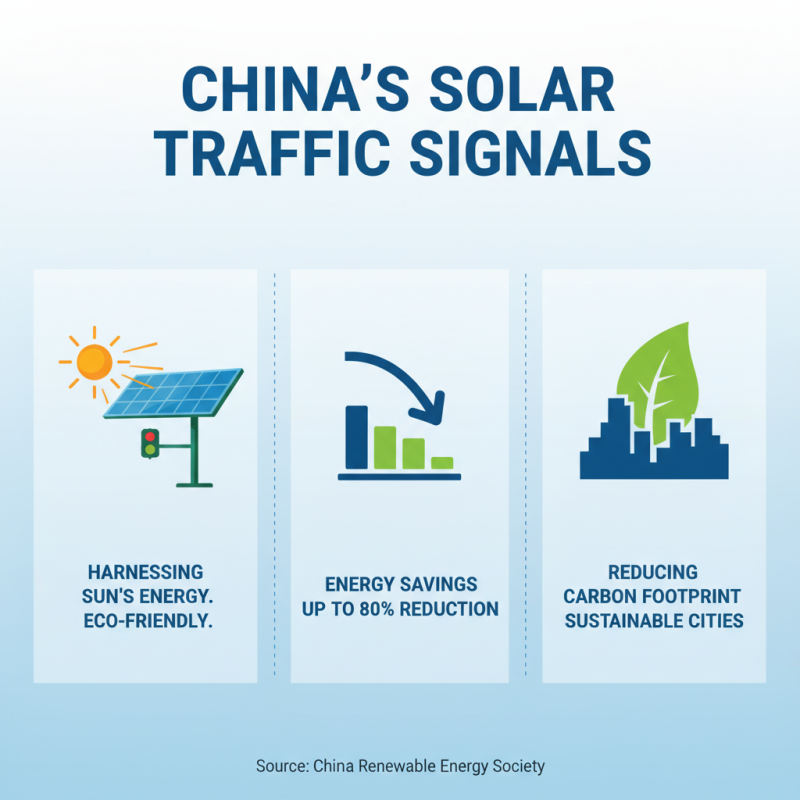
Solar traffic signal lights have gained popularity in China. These innovative systems utilize solar panels to harness energy, making them eco-friendly and cost-effective. According to a report by the China Renewable Energy Society, solar traffic signals could reduce energy consumption by up to 80%. This is significant for cities looking to minimize their carbon footprint.
In urban areas, the installation of solar traffic signals can increase safety and efficiency. They operate independently of the electrical grid, providing flexibility in placement. In remote regions, this technology becomes crucial. A recent study indicated that 47% of towns in China still lack conventional traffic lights. Solar signals can fill this gap quickly and affordable. Yet, challenges remain. Maintenance issues can arise, especially in areas with dust or extreme weather. Regular cleaning is essential for optimal performance.
Despite their benefits, the initial setup costs can be a concern for some municipalities. Proper budgeting and planning are critical to ensure long-term savings. Incorporating solar traffic lights is not just about installation; it’s a commitment to sustainability and better urban planning. As cities evolve, embracing this technology could lead to safer roads and a greener environment.
Environmental Impact of Solar Traffic Signal Lights
Solar traffic signal lights are becoming more prevalent in China, largely due to their positive environmental impact. These lights harness solar energy, reducing the reliance on conventional electricity. This shift minimizes greenhouse gas emissions, a crucial step in combatting climate change. Furthermore, using renewable energy sources promotes sustainability.
Adopting solar traffic signal lights also leads to reduced air pollution. Traditional traffic lights require significant energy, often derived from fossil fuels. As cities grow and traffic increases, pollution levels rise. Solar-powered options help alleviate this problem. However, their efficiency can be influenced by weather conditions, leading to inconsistent performance in certain areas.
There are also concerns regarding the initial installation costs of solar traffic lights. Although they save money on energy bills in the long run, the upfront investment can deter some municipalities. Yet, the overall reduction in carbon footprint and improvement in air quality can provide significant benefits over time. This makes solar traffic signal lights a valuable option, despite some challenges that require further consideration.
Cost-Effectiveness of Solar Traffic Signal Lights
Solar traffic signal lights are becoming an essential part of urban infrastructure in China. These lights utilize solar energy, which drastically reduces operational costs. According to a report by the China Renewable Energy Society, energy expenditures can be cut by up to 80% when using solar-powered systems. This financial efficiency is appealing to municipalities looking to optimize budgets.
Maintenance costs are another crucial consideration. Traditional traffic signals require regular maintenance and electrical supply, leading to high ongoing expenses. Solar traffic signals, however, have fewer mechanical components and longer lifespans. A study published by the Beijing Institute of Technology indicates that these systems can last five years longer than conventional lights with proper setup and care. This longevity minimizes the need for frequent replacements.
However, the initial installation cost can be a barrier. Some municipalities may hesitate due to upfront expenses. Proper planning and investment analysis are needed to ensure cost-effectiveness. Planning should also include assessing sunlight exposure in different areas, as some regions may face challenges. Ultimately, careful evaluation can lead to substantial long-term savings while enhancing safety on the roads.
Improved Traffic Safety and Efficiency with Solar Technology
Solar traffic signal lights are revolutionizing urban transportation in China. By harnessing renewable energy, they improve traffic safety and efficiency. These lights operate off solar panels, reducing dependence on electricity. They shine bright during the day and illuminate intersections at night, enhancing visibility for drivers and pedestrians alike.
However, the technology isn't without its challenges. Sometimes, solar panels may be obstructed by dirt or debris, impacting performance. Local weather conditions can also affect battery life. Setting up these systems requires careful planning to ensure optimal sun exposure. Despite these considerations, the overall benefits often outweigh the drawbacks.
In urban areas, solar traffic lights can significantly reduce accidents. They provide clear signals, encouraging drivers to slow down. Pedestrians feel safer crossing busy roads. This technology not only contributes to safer streets but also promotes environmental sustainability. The integration of solar technology into traffic systems exemplifies forward-thinking urban planning in China.
Top 10 Benefits of Solar Traffic Signal Lights in China
Current Trends and Future of Solar Traffic Signals in China
As urbanization accelerates in China, solar traffic signal lights are emerging as a sustainable solution. The market for solar traffic signals is experiencing rapid growth, projected to reach 1.2 billion RMB by 2025. This shift is driven by the need for energy-efficient solutions and reduced carbon footprints. Unlike traditional signals, solar-powered options utilize photovoltaic technology. They harness sunlight to function autonomously, reducing dependency on the grid.
Current trends show an increasing adoption of these systems in rural and urban areas. Cities like Beijing and Shanghai are actively integrating solar signals into their infrastructure. These systems not only lower energy costs but also improve traffic safety. Reports indicate that solar traffic signals can last up to 10 years, which presents a long-term cost-saving advantage over conventional options.
However, challenges remain. The initial installation costs can be high. Additionally, maintenance in extreme weather conditions is a concern. Solar panels may require cleaning to ensure optimal performance. Officials emphasize the necessity for guidelines on best practices for deployment and maintenance. Ongoing research is crucial to address these issues and enhance the reliability of solar traffic signals. The potential is vast, but it demands careful planning and execution.
Top 10 Benefits of Solar Traffic Signal Lights in China - Current Trends and Future of Solar Traffic Signals in China
| Benefit |
Description |
Current Adoption Rate (%) |
Future Projection (%) |
| Energy Efficiency |
Uses solar energy to power signals, reducing reliance on grid power. |
30 |
70 |
| Cost Savings |
Lower electricity bills and maintenance costs compared to traditional signals. |
25 |
65 |
| Environmental Impact |
Reduces carbon footprint by utilizing renewable energy. |
40 |
80 |
| Enhanced Visibility |
LED technology provides better visibility than traditional lights. |
50 |
90 |
| Easy Installation |
Simplified installation processes without the need for extensive wiring. |
35 |
75 |
| Remote Monitoring |
Integration with smart traffic management systems allows for real-time monitoring. |
20 |
60 |
| Long Lifespan |
Solar signals typically have a longer operational life than traditional systems. |
30 |
85 |
| Disaster Resilience |
Solar signals can remain operational during power outages. |
15 |
70 |
| Government Support |
National policies and subsidies promote the installation of solar traffic signals. |
40 |
90 |
| Public Safety |
Improved traffic flow and reduced accidents enhance overall safety. |
45 |
85 |